Introduction to Hip Resurfacing
Hip Resurfacing is a highly specialized orthopedic procedure designed to treat severe hip joint damage while preserving as much of the patient's natural bone structure as possible. It serves as an advanced alternative to traditional total hip replacement (THR), particularly for younger, more active patients who wish to maintain an active lifestyle after surgery.
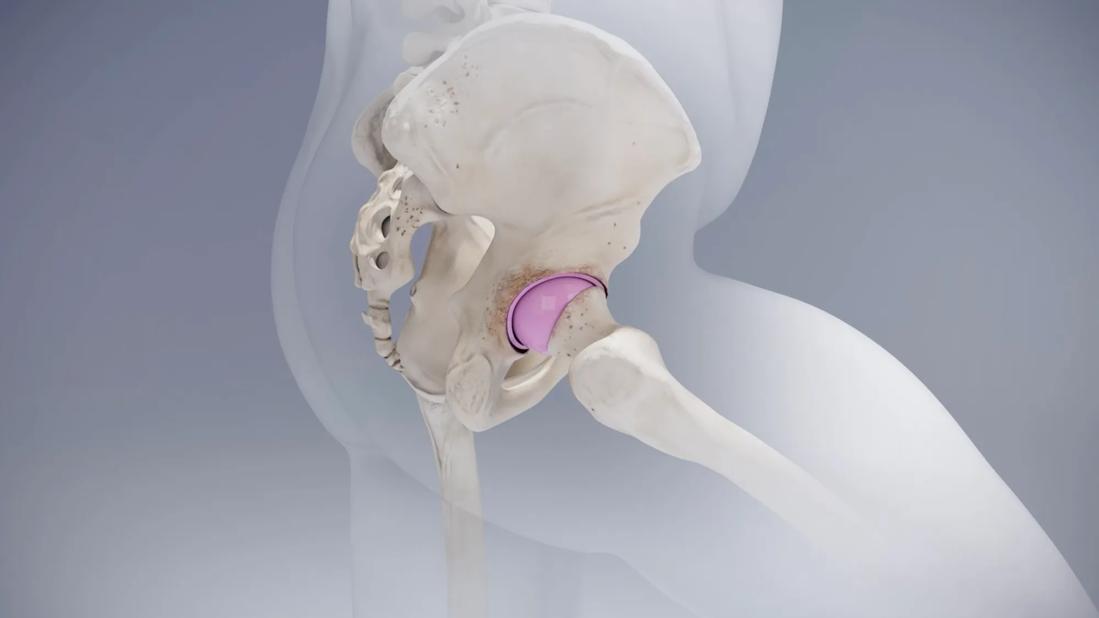
In a normal hip joint, the femoral head (the ball at the top of the thigh bone) fits snugly into the acetabulum (the cup-shaped socket of the pelvis). This joint is cushioned by cartilage, which allows smooth and pain-free motion. Over time or due to specific medical conditions, this cartilage may wear away, leading to pain, stiffness, and reduced mobility - a condition often called degenerative hip arthritis.
Unlike a total hip replacement, which removes both the femoral head and the acetabular socket, hip resurfacing reshapes the damaged femoral head and covers it with a smooth metal cap, while a corresponding metal cup is inserted into the socket. This preserves bone and allows a more natural distribution of body weight across the hip.
This bone-conserving approach offers several benefits - it maintains bone density, reduces dislocation risk, and makes future revision surgeries easier, should they be needed later in life. With the evolution of materials such as high-grade cobalt-chromium alloys, ceramic coatings, and improved implant designs, hip resurfacing has become one of the most reliable and long-lasting surgical options for hip joint restoration.
Today, this technique allows patients - especially those under 60 years old with strong bone quality - to return to active, pain-free lifestyles, enjoying sports, fitness, and daily activities without restriction.
Causes and Risk Factors Leading to Hip Resurfacing
Hip resurfacing is typically indicated when the natural hip joint is severely damaged and conservative treatments - such as physiotherapy, anti-inflammatory medications, or injections - no longer provide relief. The causes can stem from various degenerative, traumatic, or congenital conditions.
A. Common Causes of Hip Damage
-
Osteoarthritis:
The most frequent reason for hip resurfacing. It results from gradual wear and tear of the cartilage covering the bones. As this cushioning layer erodes, the bones rub against each other, causing inflammation, stiffness, and chronic pain. -
Rheumatoid Arthritis:
This autoimmune disorder leads to long-term inflammation of the joint lining, damaging cartilage and bone over time. -
Avascular Necrosis (Osteonecrosis):
A serious condition caused by loss of blood supply to the femoral head, leading to bone death and joint collapse. -
Hip Dysplasia:
A developmental deformity where the hip socket is abnormally shallow, predisposing individuals to premature arthritis. -
Post-Traumatic Arthritis:
Occurs after severe fractures or dislocations that disrupt the joint surface, resulting in chronic stiffness and pain. -
Slipped Capital Femoral Epiphysis (SCFE):
A childhood growth disorder that causes improper alignment of the hip, often leading to early degenerative changes in adulthood.
B. Risk Factors That Increase the Need for Surgery
While hip damage can occur at any age, certain risk factors increase the likelihood of needing hip resurfacing:
-
High levels of physical activity that place stress on the hip joint.
-
Genetic predisposition to joint degeneration or dysplasia.
-
Obesity, which increases joint load and accelerates wear.
-
History of hip injuries or fractures.
-
Chronic inflammatory diseases, such as lupus or gout.
-
Long-term corticosteroid use, which can weaken bone structure.
Typically, surgeons recommend hip resurfacing for patients under 60 years old, particularly men, as they tend to have denser bone and better outcomes.
Symptoms and Signs Indicating the Need for Hip Resurfacing
Patients who qualify for hip resurfacing usually suffer from chronic, debilitating hip pain that limits mobility and disrupts daily life. The symptoms often progress gradually but may worsen suddenly after an injury or increased physical activity.
Common Symptoms Include:
-
Persistent Pain:
Aching or sharp pain in the hip, groin, thigh, or buttock that worsens with movement or prolonged sitting. -
Stiffness and Limited Motion:
Difficulty bending, stretching, or rotating the hip joint. -
Grinding or Clicking Sensation:
Caused by friction between roughened bone surfaces. -
Swelling and Tenderness:
Inflammation in the hip region that increases with activity. -
Limping or Uneven Walking:
The pain and stiffness can alter gait, causing long-term strain on other joints. -
Difficulty Performing Routine Tasks:
Simple activities like climbing stairs, walking long distances, or tying shoes become challenging.
When to Seek Surgical Consultation
When pain persists despite physical therapy, painkillers, or lifestyle adjustments, and mobility becomes increasingly limited, it may indicate that joint resurfacing or replacement surgery is necessary to restore comfort and function.
Diagnosis of Hip Joint Degeneration Before Hip Resurfacing
Diagnosis involves a combination of clinical examination, imaging tests, and medical evaluation to determine the severity of joint damage and whether the patient is an ideal candidate for hip resurfacing.
A. Clinical Evaluation
The orthopedic specialist begins with a thorough review of the patient's symptoms, medical history, and physical examination. Key aspects evaluated include:
-
Range of hip motion.
-
Presence of deformities or muscle weakness.
-
Walking pattern and leg length differences.
B. Diagnostic Imaging Tests
-
X-Rays:
The first imaging test to detect bone changes, joint space narrowing, and arthritic deformities. -
MRI (Magnetic Resonance Imaging):
Provides detailed images of cartilage, ligaments, and bone marrow, identifying avascular necrosis or inflammation. -
CT Scan:
Used to assess bone structure, density, and alignment for surgical planning. -
Blood Tests:
Help detect infections or inflammatory markers if autoimmune arthritis is suspected.
C. Candidate Evaluation for Hip Resurfacing
Ideal candidates are typically:
-
Under 60 years of age.
-
Have strong bone quality.
-
Lead an active lifestyle.
-
Do not suffer from osteoporosis or severe deformities.
If bone density is poor or the joint is severely damaged, total hip replacement may be preferred instead of resurfacing.
Treatment Options - The Hip Resurfacing Procedure
A. Preoperative Preparation
Before the surgery, patients undergo pre-anesthetic evaluation, blood tests, and cardiac assessment. Preoperative physiotherapy is often recommended to strengthen muscles, while lifestyle changes such as quitting smoking or losing weight improve healing and reduce complications.
B. The Surgical Procedure
Hip resurfacing typically lasts between 1.5 to 3 hours and involves the following stages:
-
Anesthesia:
General or spinal anesthesia is administered for comfort. -
Exposure:
The surgeon makes a small incision to access the hip joint. -
Preparation of the Femoral Head:
The damaged bone and cartilage are reshaped, and a metal cap is fitted over the femoral head. -
Preparation of the Socket (Acetabulum):
A metal cup is implanted into the hip socket to replace worn cartilage. -
Assembly:
The resurfaced femoral head fits smoothly into the new socket, creating a low-friction surface for natural motion. -
Closure:
The surgical site is closed with sutures, and dressings are applied.
C. Postoperative Recovery
-
Hospital Stay: Usually 2-4 days.
-
Rehabilitation: Begins within 24 hours, including walking and muscle-strengthening exercises.
-
Full Recovery: Most patients return to light activities within 6-8 weeks and full activity within 3-6 months.
Physical therapy is critical for regaining flexibility, balance, and strength, ensuring long-term success.
Prevention and Management After Hip Resurfacing
A. Immediate Postoperative Care
-
Pain Management: Controlled using medications and local cooling therapy.
-
Mobility Training: Walking aids like crutches or walkers are used during early recovery.
-
Wound Care: Keep the incision clean and dry to prevent infection.
-
Blood Clot Prevention: Blood thinners and early mobilization are used to reduce the risk of thrombosis.
B. Long-Term Management
-
Maintain a healthy weight to minimize stress on the joint.
-
Engage in low-impact exercises such as walking, cycling, and swimming.
-
Avoid repetitive heavy lifting or high-impact sports.
-
Schedule regular follow-ups and X-rays to monitor implant health.
C. Lifestyle Modifications
Proper nutrition - including calcium, vitamin D, and protein - supports bone strength and recovery. Avoiding alcohol and tobacco also promotes faster healing.
Complications of Hip Resurfacing
While modern hip resurfacing is generally safe and highly successful, as with all surgeries, it carries some potential risks.
A. Early Complications
-
Infection: Rare, but serious if it occurs; managed with antibiotics or revision surgery.
-
Bleeding or Hematoma: Controlled during surgery or through postoperative drainage.
-
Blood Clots (DVT): Prevented with anticoagulants and early mobilization.
-
Dislocation: Rare due to the larger size of the resurfaced femoral head.
B. Long-Term Complications
-
Metal Ion Release: Older metal-on-metal implants could release trace metal particles; modern designs have largely solved this.
-
Femoral Neck Fracture: Occurs in less than 1-2% of cases, typically due to bone weakness.
-
Implant Loosening: Can happen after many years of wear; requires revision surgery.
-
Persistent Pain or Stiffness: Usually resolves with physiotherapy and time.
With proper patient selection and expert surgical technique, complications are minimal, and over 90% of patients enjoy long-term success.
Living with the Condition After Hip Resurfacing
Life after hip resurfacing often means a return to normalcy, activity, and confidence. Patients regain independence and experience significant improvements in both physical and emotional well-being.
A. Recovery Journey
-
Weeks 1-3: Gradual walking with support and gentle exercises.
-
Weeks 4-8: Improved strength and flexibility, transition to normal walking.
-
3-6 Months: Resume recreational activities such as hiking, cycling, or golf.
B. Long-Term Outlook
Modern hip resurfacing implants are designed to last 15-25 years or longer, depending on activity levels. Regular monitoring ensures continued joint function.
C. Emotional and Lifestyle Benefits
-
Relief from chronic pain and stiffness.
-
Enhanced movement and balance.
-
Improved sleep quality and energy levels.
-
Greater participation in work, travel, and sports.
With discipline and proper care, patients can live an active, fulfilling life for decades after the surgery.
Top 10 Frequently Asked Questions about Hip Resurfacing
1. What is Hip Resurfacing?
Hip resurfacing is a type of bone-conserving hip
surgery performed to relieve pain and restore function in patients with
severe hip arthritis.
Unlike a traditional total hip replacement, hip resurfacing
preserves more of the patient's natural bone. The damaged surface of
the femoral head (the “ball” of the hip joint) is trimmed and capped with a
smooth metal covering, while the socket is fitted with a metal cup.
This technique provides natural joint movement and is often preferred
for younger, active patients.
2. How is Hip Resurfacing different from Hip Replacement?
The key differences are:
-
Bone preservation: Hip resurfacing keeps most of the femoral bone intact, while hip replacement removes the entire femoral head.
-
Implant type: Resurfacing uses a metal-on-metal cap and cup, while replacement uses a metal, ceramic, or plastic implant.
-
Target patients: Hip resurfacing is ideal for younger, active patients with strong bone density, while total replacement suits older adults or those with fragile bones.
-
Ease of revision: If revision surgery is needed later, it's generally easier after resurfacing because more natural bone remains.
3. Who is a good candidate for Hip Resurfacing?
You may be a good candidate if you:
-
Are under 60 years old and physically active.
-
Have good bone quality and density.
-
Suffer from osteoarthritis, avascular necrosis (early stages), or hip dysplasia.
-
Have not had major deformities or fractures in the hip.
-
Are not allergic to metal implants.
It may not be suitable for patients with osteoporosis, kidney disease, metal allergies, or small bone structure.
4. What are the advantages of Hip Resurfacing?
The main benefits include:
-
Preserves more natural bone for future revision if needed.
-
Larger femoral head size reduces the risk of hip dislocation.
-
More natural hip movement and better stability.
-
Faster return to physical activities and sports compared to traditional hip replacement.
-
Long-lasting results for properly selected patients.
It's a great choice for young, athletic individuals who want to maintain an active lifestyle.
5. What are the possible risks or complications of Hip Resurfacing?
Like all surgeries, hip resurfacing carries some risks, including:
-
Metal ion release from the implant (may cause tissue reaction in some cases).
-
Femoral neck fracture (rare but unique to resurfacing).
-
Infection or blood clots.
-
Leg length discrepancy.
-
Nerve or vessel injury (rare).
-
Implant loosening or wear over time.
Modern metal alloys and improved techniques have greatly reduced these risks.
6. How is Hip Resurfacing Surgery performed?
The procedure is done under general or spinal anesthesia and typically
lasts 2-3 hours.
Steps include:
-
A small incision is made to expose the hip joint.
-
The damaged cartilage and bone from the femoral head are trimmed and reshaped.
-
A metal cap is placed over the femoral head.
-
The hip socket (acetabulum) is fitted with a metal cup implant.
-
The joint is tested for movement and stability, then the incision is closed.
Patients usually start walking with assistance within 1-2 days after surgery.
7. What is the recovery process after Hip Resurfacing?
Recovery time varies by patient but generally includes:
-
Hospital stay: 2-4 days
-
Walking with support: within 24-48 hours
-
Physical therapy: begins soon after surgery to regain mobility and strength
-
Return to daily activities: 4-6 weeks
-
Return to sports: usually within 3-6 months
Most patients experience significant pain relief and improved mobility within the first few weeks.
8. How long does a Hip Resurfacing implant last?
Modern hip resurfacing implants can last 15-20 years or longer, depending on:
-
The patient's age and activity level
-
Body weight and bone quality
-
Proper surgical technique and post-surgery care
When performed on the right candidate, resurfacing results are comparable to total hip replacement in terms of longevity and performance.
9. Are there any activity restrictions after Hip Resurfacing?
Yes, but fewer than after traditional hip replacement.
You can safely resume:
-
Low-impact exercises: walking, swimming, cycling, and yoga
-
High-impact sports (after clearance): tennis, jogging, or skiing
Avoid:
-
Excessive twisting or pivoting early in recovery
-
Heavy lifting during the first few months
Following your surgeon's rehabilitation plan ensures a safe and active return to normal life.
10. What are the long-term outcomes of Hip Resurfacing?
Long-term studies show excellent success rates - more than 90%
of patients report sustained pain relief and restored mobility after 10-15
years.
Other benefits include:
-
Natural joint feel and stability
-
Ability to maintain an active lifestyle
-
Simpler revision surgery if required later
When performed by an experienced orthopedic surgeon, hip resurfacing provides durable, reliable results with minimal complications.