Introduction to Micro Laryngeal Surgery
The larynx, or voice box, is an essential organ located in the anterior neck. It plays a central role in voice production, airway protection, breathing, and swallowing. At the heart of the larynx lie the vocal folds (vocal cords) - delicate, layered structures that vibrate to produce sound. When the vocal folds or surrounding laryngeal structures are affected by lesions, scars, polyps, cysts, or malignancy, the patient may experience hoarseness, loss of vocal endurance, airway compromise, or swallowing difficulties.
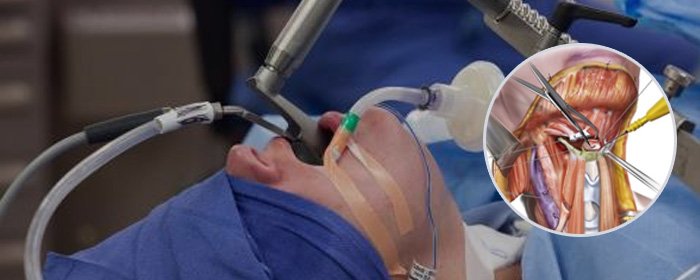
Micro laryngeal surgery (MLS), also referred to as microlaryngoscopy, is a highly specialized surgical technique used to address laryngeal disorders with precision and minimal tissue damage. Utilizing an operating microscope or high-magnification endoscope, surgeons can visualize and access the vocal folds and other delicate laryngeal structures transorally, meaning through the mouth, without the need for external incisions. Specialized instruments such as micro-scissors, forceps, and lasers allow the removal of lesions, excision of scar tissue, repair of vocal fold defects, or dilation of narrowed airway passages.
This approach has several advantages: preservation of healthy tissue, minimal postoperative discomfort, rapid recovery, and high precision. Modern MLS also integrates technologies like CO₂ laser, pulsed dye laser, and fine microsurgical tools, enabling interventions ranging from benign lesion excision to early-stage cancer removal, vocal fold scar correction, and management of airway stenosis. For professional voice users, such as singers, actors, or teachers, MLS can restore vocal quality and maintain their career without compromising airway safety. Overall, MLS represents a gold standard for precise, minimally invasive treatment of laryngeal conditions, combining surgical expertise with advanced technology to maximize functional outcomes.
Causes and Risk Factors Necessitating Micro Laryngeal Surgery
Micro laryngeal surgery is indicated in patients with a variety of laryngeal disorders that affect voice, breathing, or swallowing. The most common indications can be categorized into benign lesions, malignancies, structural abnormalities, and functional disorders.
Common Causes
-
Benign Vocal Fold Lesions
-
Vocal nodules: Small, bilateral lesions due to chronic voice misuse or overuse.
-
Polyps and cysts: Unilateral masses arising from trauma, inflammation, or microvascular damage.
-
Reinke's edema: Fluid accumulation in the vocal fold lamina propria, often associated with smoking.
-
Papillomatosis: HPV-related warty growths that can recur and impair voice or airway.
-
-
Malignant or Premalignant Lesions
-
Early-stage laryngeal carcinoma confined to the vocal cords may be excised via MLS to remove cancerous tissue while preserving vocal function.
-
Dysplastic lesions or leukoplakia requiring biopsy and removal to prevent malignant progression.
-
-
Structural Abnormalities
-
Vocal fold scarring from prior surgery, trauma, intubation, or inflammation, causing stiffness and impaired vibration.
-
Sulcus vocalis or thinning of vocal folds, leading to incomplete glottic closure.
-
Subglottic or glottic stenosis, where airway narrowing impairs breathing or phonation.
-
-
Functional Disorders
-
Vocal fold immobility or paralysis, due to nerve injury or systemic disease.
-
Spasmodic dysphonia requiring precise injection or surgical intervention to improve voice function.
-
Risk Factors
-
Voice misuse or occupational strain: Teachers, singers, and broadcasters are at higher risk of nodules or polyps.
-
Smoking and alcohol consumption: Increase susceptibility to Reinke's edema and laryngeal carcinoma.
-
Chronic laryngitis or reflux: Acid reflux can irritate the vocal folds, causing inflammation and lesions.
-
Prior intubation or laryngeal surgery: Increases risk of scarring or immobility.
-
HPV exposure: May lead to recurrent papillomatosis.
-
Age and systemic health: Older patients or those with comorbidities may have higher surgical risk or slower healing.
By understanding these causes and risk factors, surgeons can select appropriate candidates for MLS and tailor interventions to maximize both voice preservation and airway safety.
Symptoms and Signs Indicating the Need for Micro Laryngeal Surgery
The presentation of laryngeal disorders varies depending on the underlying pathology, but several key symptoms often signal the need for surgical intervention.
Common Symptoms
-
Hoarseness or voice changes: Persistent, progressive, or severe alteration in voice quality.
-
Reduced vocal endurance: Voice tires quickly during speaking or singing.
-
Roughness, breathiness, or strain in the voice: Common in nodules, polyps, or scarring.
-
Difficulty swallowing (dysphagia) or throat discomfort: Especially in lesions causing bulk or airway narrowing.
-
Breathing difficulty or stridor: Seen in airway stenosis or large papillomas.
-
Persistent throat pain, foreign body sensation, or chronic cough: Often associated with chronic inflammation or lesions.
Clinical Signs
-
Visualization with laryngoscopy may reveal:
-
Polypoid or nodular lesions on vocal folds
-
Reinke's edema with swollen vocal cords
-
Scar tissue or sulcus vocalis
-
Leukoplakia or suspicious epithelial lesions
-
Narrowed airway passages
-
-
Stroboscopy or high-speed imaging can detect abnormal vocal fold vibration or incomplete glottic closure.
These signs and symptoms, especially when refractory to voice therapy, medical management, or behavioral modifications, indicate that micro laryngeal surgery may be the most effective option to restore function and prevent long-term complications.
Diagnosis and Preoperative Evaluation
Before undergoing MLS, thorough diagnostic evaluation ensures precise surgical planning and optimal outcomes.
Diagnostic Steps
-
Medical and Voice History: Duration of hoarseness, prior interventions, occupational voice use, risk factors (smoking, reflux).
-
Physical Examination: Oral cavity, neck palpation, and flexible laryngoscopy to visualize the larynx.
-
High-Resolution Imaging: CT or MRI in select cases for deep lesions or suspected malignancy.
-
Stroboscopic Assessment: Evaluates vocal fold vibration, glottic closure, and functional impairment.
-
Voice Analysis: Acoustic measurements and perceptual evaluation to quantify baseline vocal function.
-
Biopsy (if indicated): For premalignant or malignant lesions to guide surgical approach and margin planning.
Preoperative Planning
-
Anesthesia evaluation: Most MLS procedures are done under general anesthesia with controlled airway management.
-
Dental assessment: To avoid trauma during laryngoscope insertion.
-
Voice therapy consultation: Preoperative optimization of vocal technique and postoperative rehabilitation.
-
Informed consent: Discussion of potential benefits, risks, postoperative restrictions, and recovery timeline.
Treatment Options: Micro Laryngeal Surgery and Techniques
Micro laryngeal surgery offers a range of interventions for both benign and malignant laryngeal disorders.
Techniques
-
Direct Microlaryngoscopy
-
High-magnification microscope provides clear visualization of vocal folds.
-
Fine instruments excise lesions, remove cysts, or resect scar tissue.
-
-
Laser-Assisted Microlaryngoscopy
-
CO₂ or pulsed-dye lasers enable precise ablation of tissue with minimal bleeding.
-
Common for papillomatosis, leukoplakia, or early cancer lesions.
-
-
Microsurgical Repair
-
Vocal fold medialization, scar release, or sulcus repair to restore vibratory function.
-
Injection augmentation (fat, hyaluronic acid) can improve glottic closure.
-
-
Airway Restoration
-
For subglottic or glottic stenosis, dilation, scar excision, and stent placement may be incorporated.
-
Adjunct Therapies
-
Voice Therapy: Pre- and postoperative rehabilitation enhances functional recovery.
-
Medical Management: Treatment of reflux, allergies, or inflammation to prevent recurrence.
-
Surveillance: Periodic laryngoscopy to monitor healing and detect recurrence.
MLS provides precision, functional preservation, and minimally invasive management, which is critical for professional voice users and patients prioritizing airway safety.
Prevention and Management Before and After Surgery
Effective prevention and management before and after maxillofacial surgery ensure a smooth recovery and minimize risks such as infection, pain, and poor wound healing. Key strategies include adherence to preoperative instructions, meticulous postoperative care, and vigilant monitoring for complications.
Preventive Measures
-
Maintain voice hygiene: avoid shouting, whispering strain, and overuse.
-
Control reflux and allergies to reduce laryngeal irritation.
-
Smoking cessation to minimize inflammation and risk of malignancy.
-
Early evaluation of persistent hoarseness to detect lesions before progression.
Postoperative Management
-
Strict voice rest immediately after surgery, followed by gradual rehabilitation.
-
Regular follow-up laryngoscopy to ensure proper healing and detect recurrence.
-
Hydration and humidification to maintain mucosal health.
-
Collaboration with a speech-language pathologist for structured voice therapy.
-
Avoid vocal abuse, infection exposure, and irritants to maintain surgical outcomes.
Complications of Micro Laryngeal Surgery
Although MLS is generally safe, potential complications include:
-
Bleeding or hematoma in the laryngeal region.
-
Transient or permanent voice changes, such as hoarseness or altered timbre.
-
Scar formation leading to stiffness or glottic insufficiency.
-
Airway compromise, especially with extensive lesions or postoperative edema.
-
Dental or oral trauma due to laryngoscope insertion.
-
Recurrence of lesions, particularly papillomatosis or residual polyps.
-
Infection in rare cases, which may require antibiotics or re-intervention.
Careful surgical technique, proper patient selection, and adherence to postoperative protocols minimize these risks.
Living with Micro Laryngeal Surgery
Patients undergoing MLS often experience rapid recovery with significant improvement in voice quality and airway function. Immediately post-surgery, mild discomfort and temporary hoarseness are common. Over several weeks, voice improves with therapy and adherence to voice rest protocols.
Long-Term Outlook
-
Most benign lesions are fully resolved, and functional recovery is excellent.
-
Professional voice users may regain near-normal performance with voice therapy.
-
Ongoing monitoring ensures early detection of recurrence.
Practical Tips for Patients
-
Avoid vocal strain and environmental irritants.
-
Maintain hydration and healthy lifestyle habits to support mucosal health.
-
Attend all follow-up appointments and complete recommended voice therapy.
-
Seek early consultation for persistent hoarseness or new lesions.
With appropriate care and rehabilitation, MLS offers excellent functional outcomes, voice preservation, and enhanced quality of life.
Top 10 Frequently Asked Questions about Micro Laryngeal Surgery
1. What is micro laryngeal surgery?
Micro laryngeal surgery is a specialized surgical procedure performed on the larynx (voice box) using a high-powered microscope and fine surgical instruments. It allows surgeons to remove small lesions, polyps, nodules, cysts, or early-stage cancers from the vocal cords while preserving normal voice function. The procedure is minimally invasive and is performed through the mouth, avoiding external incisions.
2. Who is a candidate for micro laryngeal surgery?
Candidates typically include patients with:
-
Vocal cord polyps, nodules, or cysts causing hoarseness or voice changes
-
Early-stage laryngeal or vocal cord cancers
-
Recurrent respiratory papillomatosis (benign growths)
-
Chronic lesions not responding to medications or voice therapy
A thorough evaluation by an ENT or laryngologist, including laryngoscopy and imaging, is required to determine suitability.
3. How is micro laryngeal surgery performed?
The procedure is usually performed under general anesthesia. A laryngoscope is inserted through the mouth to access the vocal cords. Using a surgical microscope, the surgeon carefully removes lesions or abnormal tissue while minimizing damage to surrounding structures. Precision instruments, lasers, or micro-scissors may be used to achieve optimal results and preserve voice quality. The procedure typically takes 30–60 minutes, depending on the complexity.
4. What are the benefits of micro laryngeal surgery?
The main benefits include:
-
Removal of vocal cord lesions that affect voice or breathing
-
Preservation and improvement of voice quality
-
Minimally invasive approach with no external scars
-
Early treatment of malignant lesions, improving prognosis
Patients often notice improved voice function and reduced discomfort shortly after recovery.
5. Is micro laryngeal surgery painful?
The surgery itself is painless because it is performed under general anesthesia. After the procedure, patients may experience mild throat soreness, irritation, or difficulty swallowing, which typically resolves within a few days. Pain is usually manageable with prescribed medications and voice rest.
6. What are the risks and complications of micro laryngeal surgery?
Although generally safe, potential risks include:
-
Temporary or rarely permanent changes in voice quality
-
Bleeding or infection at the surgical site
-
Swelling of the vocal cords leading to temporary hoarseness
-
Rare injury to surrounding laryngeal structures
These risks are minimized when the surgery is performed by an experienced ENT surgeon specialized in laryngeal procedures.
7. What is the recovery period after micro laryngeal surgery?
Recovery is typically quick. Most patients can resume light activities within a few days. Voice rest is strongly recommended for 1–2 weeks to allow the vocal cords to heal. Complete recovery and optimal voice quality may take several weeks, and follow-up appointments are essential to monitor healing and prevent recurrence of lesions.
8. Will I need voice therapy after surgery?
Yes. Voice therapy is often recommended after micro laryngeal surgery to help patients regain proper vocal technique, strengthen vocal cords, and prevent strain that could lead to recurrence of lesions. A speech-language pathologist may provide exercises tailored to the patient's needs.
9. Can micro laryngeal surgery cure vocal cord cancer?
Micro laryngeal surgery can effectively remove early-stage vocal cord cancers and precancerous lesions. In combination with follow-up monitoring and, if needed, adjunct treatments such as radiation therapy, it offers excellent outcomes. Early diagnosis and treatment are crucial for preserving voice function and improving long-term prognosis.
10. How much does micro laryngeal surgery cost, and is it covered by insurance?
The cost varies depending on hospital, surgeon expertise, anesthesia, and post-operative care. Many health insurance plans cover micro laryngeal surgery if it is medically necessary, such as for removal of benign or malignant lesions. Patients should confirm coverage, co-pays, and out-of-pocket costs with both the hospital and insurance provider.