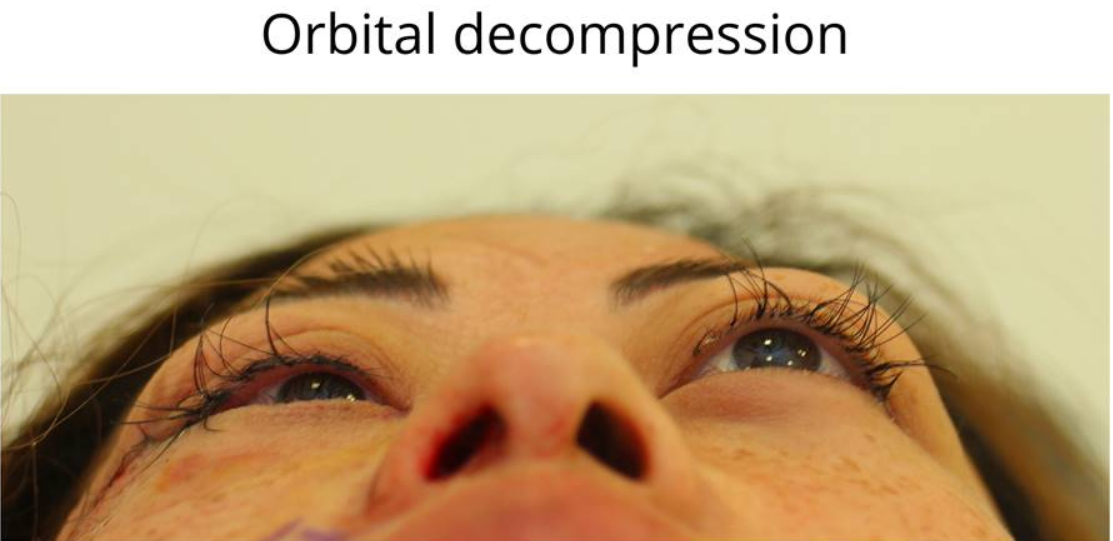
Introduction to Orbital Decompression
Orbital decompression surgery is a specialized ophthalmic procedure aimed at relieving pressure within the eye socket (orbit) to treat conditions that cause abnormal protrusion of the eyeball (proptosis) or threaten vision. The orbit is a rigid bony compartment that houses the eye, optic nerve, extraocular muscles, fat, and connective tissue. Any increase in orbital content, whether from inflammation, trauma, tumors, or excess fat, can push the eye forward, compress the optic nerve, restrict ocular movements, and create functional and cosmetic problems.
The surgery works by removing specific parts of the orbital bones and, in some cases, orbital fat to create additional space within the orbit. This allows the eye to recede to a more normal position, reducing pressure on the optic nerve, alleviating pain or discomfort, protecting the cornea, and improving eyelid closure. While the functional benefits are paramount, cosmetic improvement is a significant secondary benefit, as orbital decompression can dramatically improve facial symmetry and appearance.
Modern orbital decompression procedures utilize minimally invasive techniques, including endoscopic approaches through the nasal cavity or transconjunctival/eyelid incisions. These approaches reduce external scarring, minimize tissue trauma, and allow precise access to the medial, inferior, and lateral orbital walls. The decision regarding which walls to decompress and whether to remove fat, bone, or both depends on disease severity, orbital anatomy, and functional or cosmetic needs. Overall, orbital decompression offers a safe and effective method for patients suffering from severe proptosis or optic nerve compression, significantly improving quality of life.
Causes and Risk Factors of Orbital Decompression
Orbital decompression is indicated in conditions that cause increased orbital content, pressure, or protrusion of the globe. Understanding the underlying causes is essential for treatment planning and predicting surgical outcomes.
Primary Causes
-
Thyroid Eye Disease (TED): This autoimmune condition is the most common indication. In TED, antibodies attack orbital tissues, leading to inflammation, fat expansion, and extraocular muscle swelling. The confined bony orbit cannot accommodate the increased volume, resulting in proptosis, eyelid retraction, exposure keratopathy, and, in severe cases, optic neuropathy.
-
Orbital Trauma: Fractures of the orbital walls or blunt injuries can distort orbital anatomy, trap orbital contents, or compress the optic nerve. Reconstructive decompression is sometimes required to restore normal orbital volume and protect vision.
-
Orbital Tumors: Benign or malignant masses in the orbit can increase intraorbital pressure and displace the eyeball forward. Decompression may be performed to relieve pressure while treating or excising the mass.
-
Congenital or Acquired Orbital Malformations: Rarely, patients may present with anatomical variations or post-surgical changes that restrict orbital volume, necessitating decompression.
Risk Factors
Certain factors influence the severity of orbital disease and outcomes of decompression surgery:
-
Active or uncontrolled thyroid disease: Performing surgery during the inflammatory phase of TED increases the risk of complications.
-
Smoking: Exacerbates autoimmune orbital disease and delays healing.
-
Pre-existing double vision or optic nerve impairment: Increases surgical complexity.
-
Anatomical variations: Thin orbital walls or prior surgeries may make decompression technically challenging.
-
Delayed treatment: Failure to address proptosis or optic neuropathy early can lead to irreversible vision loss.
Identifying these causes and risk factors enables surgeons to tailor the surgical approach, anticipate challenges, and counsel patients effectively.
Symptoms and Signs Indicating Orbital Decompression
Patients requiring orbital decompression often present with a combination of functional, aesthetic, and neurological symptoms.
Functional Symptoms
-
Difficulty closing eyelids completely (lagophthalmos), leading to dry eye, irritation, and corneal ulceration.
-
Blurred or diminished vision due to optic nerve compression.
-
Visual field defects or color vision changes.
-
Double vision (diplopia) caused by extraocular muscle involvement.
-
Pain, pressure, or headaches behind or around the eyes.
Aesthetic Symptoms
-
Bulging or protruding eyes (proptosis), causing a staring or widened-eye appearance.
-
Eyelid retraction, with visible sclera below the iris.
-
Asymmetry between eyes.
-
Social or psychological distress due to facial changes.
Clinical Signs
-
Exophthalmometry measurements quantify the degree of eye protrusion.
-
Optic nerve assessment, including fundoscopy, to detect optic disc swelling or atrophy.
-
Restricted eye movements due to inflamed or fibrotic muscles.
-
Imaging evidence of increased orbital fat, muscle enlargement, or optic nerve compression.
Recognizing these symptoms and signs ensures timely intervention to prevent vision-threatening complications and plan the optimal surgical approach.
Diagnosis and Preoperative Evaluation
Comprehensive evaluation is critical to determine candidacy for orbital decompression.
Medical History
-
Assessment of thyroid status or systemic autoimmune disease.
-
Prior orbital or ocular surgeries.
-
History of trauma, tumors, or chronic orbital inflammation.
-
Functional complaints: vision changes, double vision, ocular discomfort.
Physical Examination
-
Visual acuity, color vision, and visual fields.
-
Eyelid position, corneal exposure, and ocular motility.
-
Proptosis measurement using exophthalmometry.
Imaging Studies
-
CT or MRI of the orbit to evaluate bone structure, orbital walls, extraocular muscles, and optic nerve status.
-
Helps determine which orbital walls to decompress and assess risk to critical structures.
Functional Assessment
-
Optic nerve function, intraocular pressure, and tear film evaluation.
-
Assessment of corneal integrity to prevent exposure keratopathy.
Surgical Planning and Counseling
-
Discuss open vs endoscopic approach based on anatomy and surgical goals.
-
Educate patients on potential complications, expected recovery, and realistic outcomes.
Treatment Options of Orbital Decompression
Orbital decompression surgery is primarily performed to treat severe orbital proptosis (bulging of the eyes), optic nerve compression, ocular pain, or orbital hypertension-most frequently seen in thyroid eye disease (TED) but also for tumors, trauma, and rare congenital conditions. Several surgical techniques are chosen based on disease severity, anatomy, and the goals of visual and cosmetic improvement.
Endoscopic Medial Wall Decompression
Performed through the nasal cavity, this minimally invasive approach removes portions of the medial orbital wall and orbital fat to allow the eye to recede. Advantages include no external incisions, reduced recovery time, and precise visualization of critical structures.
Lateral Wall and Floor Decompression
Through small eyelid or transconjunctival incisions, the lateral or inferior walls are removed to expand orbital volume. This is used in cases of severe proptosis or when maximal decompression is required.
Orbital Fat Removal
Excision of excess orbital fat may be performed alone or in combination with bone removal to reduce proptosis. Fat decompression can provide immediate improvement with less disruption of orbital bone.
Combined Procedures
In many cases, orbital decompression is combined with eyelid surgery to correct retraction or strabismus surgery to manage diplopia. Customized combinations are tailored to the individual patient's anatomy and functional needs.
Postoperative Care
-
Monitoring for vision changes and ocular movement.
-
Managing swelling, bruising, and discomfort.
-
Eye lubrication and protection during healing.
-
Follow-up imaging and visual assessment to ensure optimal decompression.
Prevention and Management of Orbital Decompression
Although decompression is a corrective procedure, proactive management of underlying disease helps prevent progression:
-
Control of Thyroid Eye Disease: Achieving euthyroid state, managing inflammation, and avoiding smoking reduce orbital complications.
-
Eye protection: Artificial tears, taping eyelids during sleep, and using protective eyewear.
-
Monitoring disease progression: Regular ophthalmology follow-up to detect optic nerve compression early.
-
Lifestyle adjustments: Smoking cessation, adequate hydration, and avoiding orbital trauma.
Postoperative management focuses on healing, monitoring for complications, and maintaining ocular health.
Complications of Orbital Decompression
Orbital decompression carries potential complications:
-
Immediate: Bleeding, infection, orbital hematoma, corneal abrasion, optic nerve injury.
-
Intermediate: Diplopia, under- or over-correction of proptosis, infraorbital numbness, sinus issues.
-
Long-term: Persistent double vision, eyelid malposition, exposure keratopathy, or rarely, vision loss.
-
Risk factors: Extensive multi-wall decompression, active disease, pre-existing motility issues, or previous surgery.
-
Management may include strabismus surgery, eyelid correction, corneal protection, or revision decompression.
Living with Orbital Decompression
Recovery involves several weeks of swelling and bruising, gradual reduction of proptosis, and improvement in eyelid closure. Most patients notice functional and cosmetic improvements within weeks, though full recovery may take months. Long-term benefits include restored vision (if optic nerve was threatened), reduced ocular discomfort, improved eyelid closure, and enhanced appearance, which significantly improves quality of life. Ongoing follow-up is essential to monitor for recurrence, manage double vision, or correct residual eyelid changes. Patients are advised to maintain thyroid control, avoid smoking, protect their eyes, and adhere to ophthalmic check-ups to preserve surgical results.
Top 10 Frequently Asked Questions about Orbital Decompression Surgery
1. What is orbital decompression surgery?
Orbital decompression surgery is a specialized procedure designed to relieve pressure in the eye socket (orbit) by removing bone and/or fat around the eyes. It is most commonly performed for patients with thyroid eye disease (Graves' orbitopathy), where the eyes protrude (proptosis) due to inflammation and tissue swelling behind the eyes. The surgery helps reduce bulging eyes, prevent damage to the optic nerve, and improve overall eye function and appearance.
2. Why is orbital decompression performed?
The procedure is indicated for patients with:
-
Severe bulging eyes (proptosis) that cause discomfort, vision problems, or difficulty closing the eyelids
-
Optic nerve compression due to swelling behind the eyes, which can threaten vision
-
Severe inflammation or scarring affecting eye movement
-
Cosmetic concerns related to eye protrusion
Orbital decompression helps relieve pressure, protect vision, and restore a more normal appearance of the eyes.
3. Who is a candidate for orbital decompression surgery?
Candidates typically include:
-
Adults with thyroid eye disease in the stable or inactive phase of the disease
-
Patients experiencing vision-threatening complications such as optic neuropathy
-
Individuals with severe eye bulging that causes discomfort, dryness, or exposure keratitis
-
Patients who are healthy enough to undergo anesthesia and surgery
A thorough evaluation by an ophthalmologist or oculoplastic surgeon is necessary, including imaging studies like CT or MRI to assess the orbit and surrounding structures.
4. How is orbital decompression surgery performed?
The surgery can be performed using several approaches depending on the patient's anatomy and the surgeon's goals:
-
Lateral wall decompression: Removes bone from the outer wall of the orbit.
-
Medial wall decompression: Removes bone from the inner wall of the orbit near the nose.
-
Fat decompression: Removes orbital fat to reduce eye bulging without removing bone.
-
Combined decompression: Uses both bone and fat removal for significant proptosis.
The surgeon creates small incisions inside the eyelids or near the eye to access the orbit. The procedure is usually performed under general anesthesia and may take 1-3 hours depending on the complexity.
5. What are the benefits of orbital decompression surgery?
-
Reduces eye bulging and improves facial appearance
-
Relieves pressure on the optic nerve, preventing vision loss
-
Improves eye movement and reduces double vision in some cases
-
Alleviates discomfort, dryness, or exposure-related irritation
-
Enhances quality of life and self-confidence
In severe cases of thyroid eye disease, orbital decompression can be vision-saving.
6. Is orbital decompression surgery painful?
Patients do not feel pain during the surgery due to general anesthesia. After surgery, mild to moderate discomfort, swelling, or bruising around the eyes and cheeks is common. Pain is usually managed with prescribed medications. Most patients report that post-operative discomfort decreases significantly within a few days to a week.
7. What are the risks and complications of orbital decompression?
While generally safe in experienced hands, risks include:
-
Swelling, bruising, and temporary numbness around the eyes or cheeks
-
Double vision (diplopia) due to changes in eye muscle position
-
Infection or bleeding
-
Changes in eyelid position or appearance
-
Rare injury to the optic nerve, which can affect vision
-
Unsatisfactory cosmetic results requiring further surgery
Careful preoperative planning and precise surgical technique minimize risks.
8. What is the recovery process after orbital decompression?
Recovery involves:
-
Hospital stay: Often outpatient or 1-2 days in the hospital depending on the extent of surgery
-
Swelling and bruising: Peaks within 48-72 hours and gradually subsides over 2-4 weeks
-
Activity: Avoid strenuous activity for 2-4 weeks; light daily activities can be resumed earlier
-
Eye care: Lubricating eye drops, cold compresses, and head elevation help reduce swelling
-
Follow-up: Regular ophthalmology visits to monitor vision, eye alignment, and healing
Most patients notice improvement in appearance and eye comfort within weeks, with continued stabilization over months.
9. Will orbital decompression improve vision and eye function?
Yes, in cases of optic nerve compression, decompression can prevent permanent vision loss and, in some cases, improve vision. Eye movement and double vision may improve in some patients, though some may require additional strabismus surgery to correct persistent diplopia. Cosmetic appearance and reduction in bulging are usually significant and noticeable.
10. How much does orbital decompression surgery cost, and is it covered by insurance?
The cost varies depending on the hospital, surgeon, anesthesia, and complexity of the procedure. Orbital decompression is typically considered medically necessary for vision-threatening thyroid eye disease, and insurance often covers the procedure. Cosmetic-only decompression for appearance may not be fully covered. Patients should check with their insurance provider for coverage, co-pays, and out-of-pocket expenses.